Posts

Showing posts with the label TSC

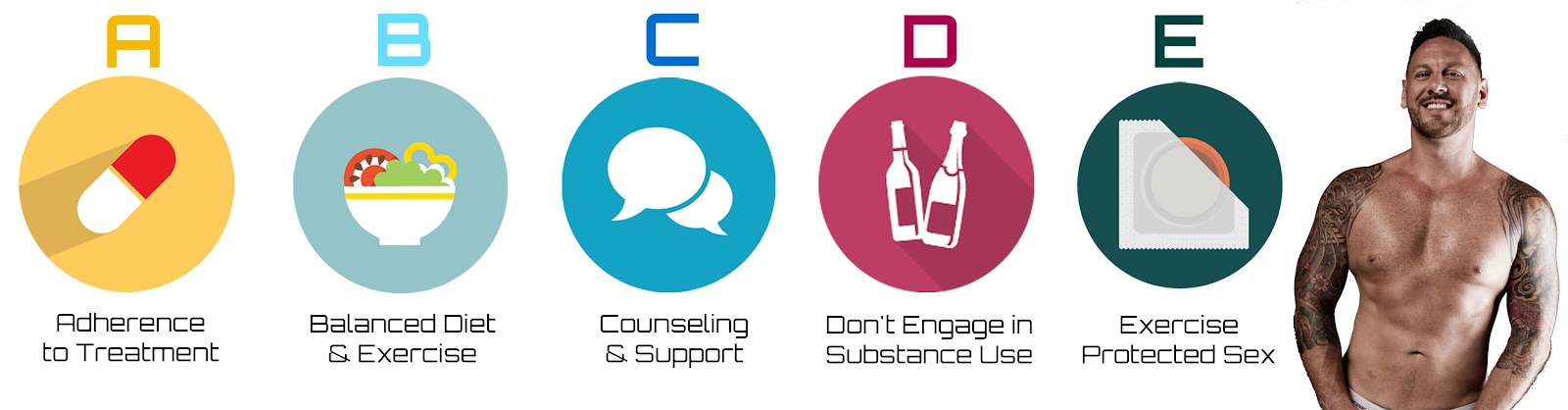
STATUS: The A to E of Being Positive to a Healthy Lifestyle
Image
By Reiner “Meow” Grospe “Am I going to die soon?” This is one of the first few questions a person newly diagnosed as positive with HIV would usually ask their counselor/healthcare provider. The answer is a resounding “No.” Being diagnosed as HIV positive means a person has the Human Immunodeficiency Virus (HIV) in their body, and it doesn’t mean the person will immediately die of the virus. How soon a person living with HIV (PLHIV) will die under natural circumstances depends on the line between HIV taking control of their body or them having control of the virus. To better know what healthcare measures PLHIVs should commit themselves to, we must first understand what this virus does to the body. Once infected with the virus, immune system cells called CD4 lymphocytes or T-cells are either directly killed or penetrated and then used by the virus as hosts in which to replicate. Once the penetrated CD4 cells can no longer contain the virus, they explode and result in a higher viral loa...

Triangle of Self-Care: Condom Use | The Key to Effectivity is Correctness and Consistency

Image
By Mark Angelo de Castro The basics of HIV Transmission ( ESSE ) states that if one of the four conditions (exit, survive, sufficiency, entry) is not satisfied, no transmission will occur. Insofar as going against these conditions is concerned, the use of condoms provides us with a very reliable line of protection to prevent HIV transmission by blocking the entry of the virus. But do condoms really work? There are inconsistencies in reports about the effectiveness of using condoms to prevent HIV transmission. Some studies say that if condoms are used correctly and consistently, they could provide up to 98% protection [1] , while others put its effectiveness at a lower 70% [2] . The Center for Disease Control and Prevention, without mentioning any quantitative data, states that “C onsistent and correct use of latex condoms is highly effective in preventing sexual transmission of HIV, the virus that causes AIDS.” [3] It is important to note that the use of condoms does not provide an a...

Triangle of Self-Care: The Game of Safe and Satisfying Sex

Image
By Carlos Diego A. Rozul There are some things from our childhood that we leave behind. We throw away our old clothes, our old school books, and even our old security blanket. Not all things from our past are thrown away, however. There are a lot that we carry into adulthood such as the lessons we’ve learned, the memories we’ve formed with old friends, and for some of us, even our old toy collection! As we grow older, the games we play tend to get more and more complicated. From the simple rules of Snakes and Ladders to the complex dynamics of a strategic board game, we play to obtain the same objective - to win. When we realize our nature as sexual beings, we begin to play with trust, pleasure, and health. In the game of safe and satisfying sex, the choice is ours to pick what card to draw. Mutual Masturbation and Dry Humping The first card we may have drawn when first engaging in sex is manual sex and frottage. In more accessible terms, mutual masturbation (jack off or fingering) an...

Triangle of Self-Care: Understanding the Window Period

Image
By Mark Angelo de Castro A common question regarding HIV testing is: “When should I go for one?” Some say HIV testing should be done regularly, at least once a year. Others say it has to be twice a year, and there are those who say it should be done quarterly. None of them are wrong, but none of the statements are entirely correct either. This is because the correct time a person has to undergo HIV testing depends on his/her actions and behaviors. But for us to understand the relevant factors to determine the correct timing, we have to learn and understand the concept of the window period. The Window Metaphor The “window period [1] ” is the time between a potential exposure to HIV infection and when an HIV test will give an accurate result with the appearance of detectable antibodies [2] . The same as how “the birds and bees” metaphor is used to explain sexual intercourse to children, we could use an actual window to explain how the window period works. The image below shows four boxe...

Triangle of Self-Care: The ESSEntials of HIV Transmission

Image
By Mark de Castro There are many ways to keep ourselves from forgetting simple but essential things. For instance, we use an alarm clock to help us wake up early and be on time for work; we use a bookmark to remind us where we are on a book we’re reading; we bring a grocery list to make our visit to the marketplace quick and easy - the list goes on. Well, this checklist we’re about to share with you may sound new, but it may help answer some of your questions about the essential conditions or factors regarding HIV (Human Immunodeficiency Virus) infection. The crossword above contains words that are important for us to learn about HIV transmission. These simple terms, however, are not enough for us to understand what these words mean. They only lend themselves visible and meaningful to people who have undergone “HIV 101” trainings or seminars and those who have had HIV counseling. (If you’ve noticed, the same principles are used by counselors whenever conducting risk assessment.) This i...

PrEP Talk

Image
By: Jayson Celeste You possibly might have heard about Pre-exposure Propahylaxis (PrEP) by now. It definitely has been creating some buzz in certain circles:  in fact it was mentioned in the first episode of season two of the series, “How to Get Away with Murder”. However, if it's your first time to hear of PrEP and what it means, then we invite you to read on. So what is PrEP? PrEP has been described as a promising biomedical intervention for HIV (Human Immunodeficiency Virus) infection, and Truvada (combination of tenofovir and emtricitabine) is currently the most common type of medicine used for PreP. Prescription is started before possible exposure to HIV, hence the name “pre-exposure”. It's pretty much like a contraceptive pill: as contraceptives keep the person taking it from getting pregnant unintentionally, PrEP keeps HIV infections at bay. Also, another important thing to note that is common to both contraceptives and PrEP is that their effectivity only depends on ...